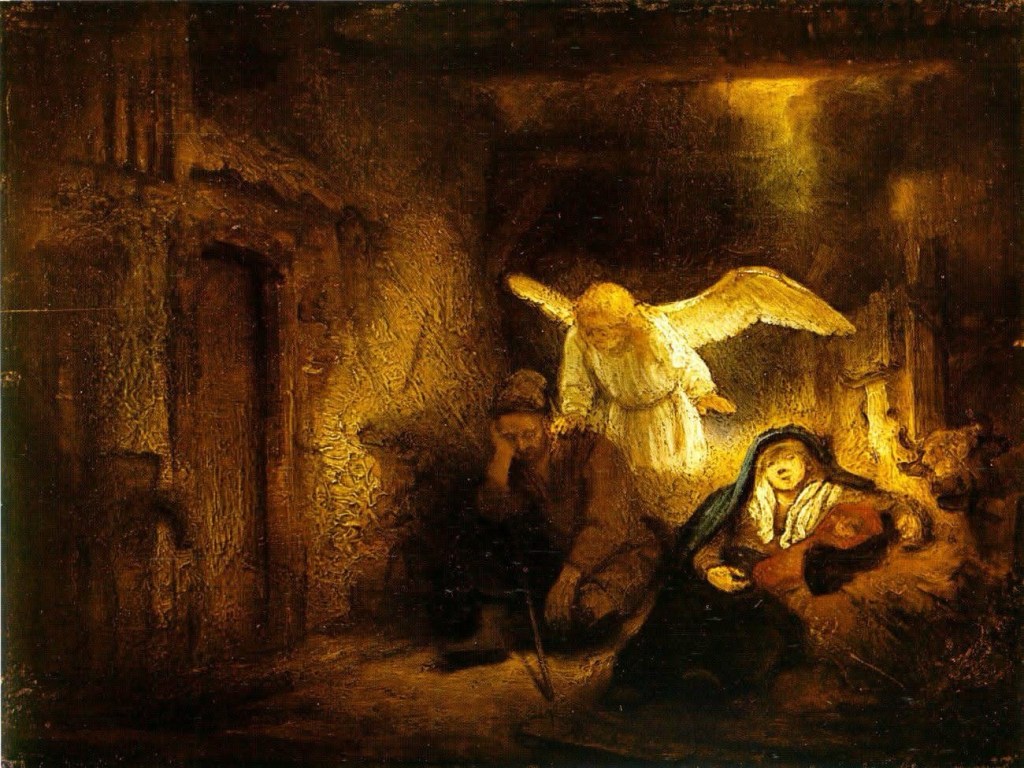
In the beginning, before beginnings were even conceived, before the light split from the void, there was a silence so absolute that it defied its own existence. It was not a nothingness, but a fullness—a heaving, brimming potential that stood outside of time, aching to unfurl. This was not a passive state, not a mere absence of form, but a trembling, unspoken desire—a pressure building, a scream yet unvoiced. And it was from this immeasurable, impossible tension that God moved.
God did not move to suppress, to conquer, or to define—God moved because to exist is to move, and to move is to create. That first motion was not a reaction but an action; it did not rise in opposition to anything because there was nothing to oppose. It was a declaration, a breaking open of what had been sealed, an unspooling of eternity into fragments. God’s hand, vast beyond comprehension, tore itself apart, not in violence but in the ultimate act of love—a love so absolute it demanded to divide and scatter itself across all that would ever be.
And in that first tearing, the light collided with its absence, and the absence became the canvas upon which light painted. But this was not merely an act of creation; it was a dialogue, an ongoing conversation between the opposites that had been born in that primordial moment. Light did not triumph over darkness, nor did darkness swallow the light—instead, they wove themselves into the fabric of existence, each giving the other its meaning. For what is light without shadow? What is joy without the whisper of sorrow to remind it of its fleeting grace?
God’s intention was not to craft a static perfection but to ignite an endless becoming—a boundless motion that spirals through time and space, a rhythm that never ceases. This was the first act of polarity, the birth of duality, the sacred clash that gives rise to all things. And yet, at its core, this motion is not division but union, not conflict but harmony, a dance so intricate that its steps cannot be fully seen except in glimpses—in the fleeting brilliance of a star, in the aching beauty of a human tear, in the spaces where light and dark touch but never dissolve.
This is the secret God has written into the marrow of creation: that motion itself is the meaning. To be is to move, to expand, to collide, to blend, to break apart, and to reform. And in this endless movement, we are given not answers but questions, not destinations but paths. God’s tearing apart of the void was not a conquest but an invitation;a call to enter the labyrinth of existence and to find, in its spirals and turns, the echo of that first, unspeakable motion.
And so we are left, not with the comfort of finality but with the wonder of infinity. For every force, there is its equal; for every cry, a silence to hold it; for every motion, an opposite that ensures its continuation. This is the essence of God’s creation: not to resolve, but to unfold, not to end, but to perpetuate. And in that endless unfolding, we find our place, not as masters or servants, but as participants in the eternal dance. To oppose is to give purpose; to surrender is to give form. And in the balance of these truths, we glimpse the face of God, not as a distant creator but as the very motion that stirs within us, the cry and the silence, the light and the shadow, the stillness and the storm.
 ∆Remember Us∆